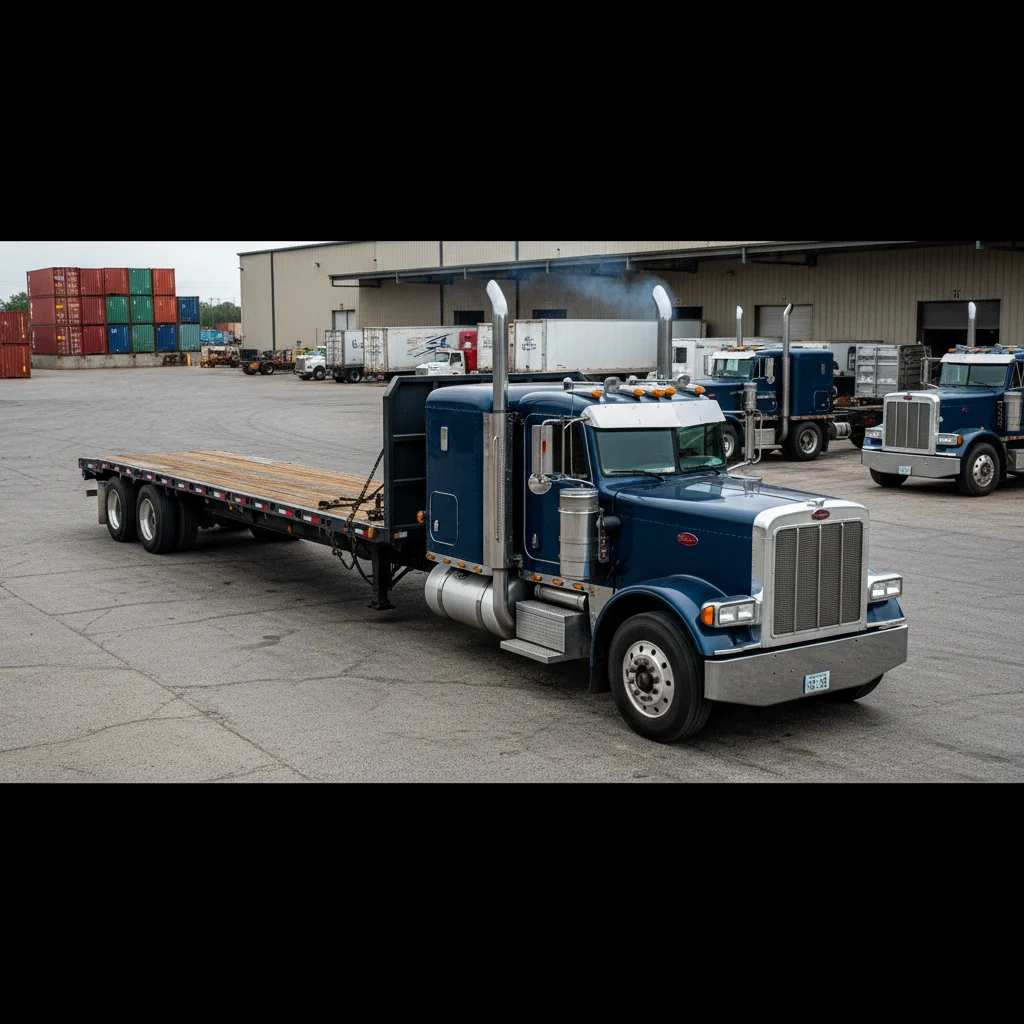
Introduction: The Criticality of Flatbed Safety in Houston's Trucking Industry
Houston, Texas, a sprawling economic hub, is a cornerstone of the nation's trucking and transportation industry. With its bustling ports, oil and gas sectors, and diverse manufacturing, flatbed trucking plays an indispensable role in moving critical, often oversized or uniquely shaped, cargo. However, the very nature of flatbed hauling—transporting exposed freight that demands rigorous securement—introduces a unique set of challenges and risks. For any trucking business operating in or through Houston, ensuring the safety of flatbed loads isn't just a regulatory obligation; it's a fundamental pillar of operational success, driver well-being, and brand reputation.
Improperly secured loads are a leading cause of preventable accidents, leading to catastrophic consequences ranging from severe injuries and fatalities to significant property damage, costly lawsuits, and irreversible damage to a company’s standing. This comprehensive guide will delve into the essential principles, regulations, and best practices for safe flatbed loading in the Houston, Texas context, providing actionable advice for drivers, fleet managers, and business owners alike. By prioritizing safety, you not only comply with stringent federal and state Department of Transportation (DOT) regulations but also safeguard your most valuable assets: your people and your business.
The Unique Challenges of Flatbed Hauling in Houston and Beyond
Understanding the Risks: Why Flatbed Safety Isn't Optional
Unlike enclosed trailers, flatbeds offer no inherent protection or containment for their cargo. This exposure means that the entire responsibility for securement falls on the driver and the loading team. The risks associated with flatbed hauling are amplified by several factors:
- Cargo Variety: Flatbeds transport an incredible array of items, from construction materials and industrial machinery to pipes, timber, and specialized equipment. Each type of cargo presents unique securement needs.
- Weight and Dimensions: Often, flatbed loads are heavy, bulky, or irregular in shape, making proper weight distribution and tie-down strategies more complex.
- Road Conditions: Vibrations, bumps, sudden braking, and sharp turns can all compromise securement if not done correctly, especially on Houston's busy and sometimes uneven roadways.
- Environmental Factors: Wind, rain, heat, and even humidity can affect securement devices and cargo integrity. Strong winds, common on highways, can exert immense pressure on tarps and loosely secured items.
Failure to adequately secure a load can result in shifting cargo, objects falling onto the roadway (a major hazard for other motorists), or even the entire load detaching from the trailer. These incidents have severe legal, financial, and human costs.
Houston's Dynamic Environment: What Truckers Need to Know
Operating a trucking business in Houston, Texas, adds specific layers of complexity to flatbed safety:
- High Traffic Volume: Houston is known for its extensive freeway system and heavy traffic. This increases the likelihood of sudden stops, aggressive maneuvers, and potential minor collisions, all of which test cargo securement.
- Infrastructure Demands: Navigating construction zones, congested industrial areas, and varied road surfaces requires peak attention to both driving and load stability.
- Climate Considerations: Houston’s hot, humid summers and occasional heavy rains and strong winds can impact equipment and materials. Tarps must be robust and secured against wind uplift, and chains or straps should be checked for corrosion or wear accelerated by humidity.
- Regulatory Scrutiny: With a high volume of commercial traffic, Texas DOT and federal FMCSA inspectors are vigilant. Non-compliance is easily detected and heavily penalized.
Pre-Trip Inspection: Your First Line of Defense
Before any cargo touches your flatbed, a thorough pre-trip inspection is non-negotiable. This meticulous check ensures that your equipment is sound and ready for the demands of the road, especially when hauling in the Houston area.
Equipment Check: Truck, Trailer, and Securement Devices
- Truck and Trailer Condition: Inspect tires for proper inflation and wear, brakes for functionality, lights for operation, and all fluid levels. Check the fifth wheel coupling. Ensure the flatbed trailer itself is structurally sound, free from cracks, excessive rust, or damaged decking.
- Securement Devices: This is paramount. Examine all straps, chains, binders, edge protectors, and dunnage.
- Straps: Look for cuts, fraying, chemical damage, or excessive wear. Ensure ratchets and buckles are in good working order. Discard any damaged straps immediately.
- Chains: Check for bent, stretched, or cracked links. Ensure clevis hooks are not bent open or damaged.
- Binders: Inspect for bent handles, worn pawls, or damaged hooks. Ratchet binders are generally safer and easier to use than snap-over (lever) binders.
- Dunnage: Ensure wood or other blocking material is free from rot, cracks, or excessive damage that could compromise its strength.
- Tarps: If used, check for rips, tears, or worn grommets that could allow wind to catch and damage the tarp or expose cargo.
- Personal Protective Equipment (PPE): Ensure drivers have appropriate gloves, safety glasses, and hard hats (if required for loading/unloading) to prevent injuries during the securement process.
Load Assessment: Knowing Your Cargo
Before you even begin loading, gather critical information about the cargo:
- Weight: Accurate weight is essential for proper weight distribution and selecting appropriate securement devices. Overweight loads are illegal and extremely dangerous.
- Dimensions: Understand the length, width, and height to plan for potential overhangs or special permits.
- Shape and Stability: Is the cargo uniform or irregularly shaped? Does it have designated tie-down points? Is it prone to rolling, shifting, or crushing?
- Center of Gravity: Estimate or determine the center of gravity to ensure stability on the trailer.
- Special Handling Instructions: Look for labels or instructions regarding lifting, stacking, or securing.
The Art and Science of Cargo Securement
Cargo securement is where art meets science. It requires an understanding of physics, regulations, and practical application to ensure stability under dynamic conditions.
Weight Distribution: The Foundation of Stability
Proper weight distribution is paramount for safe flatbed operations, influencing vehicle handling, tire wear, and stress on the trailer frame. Improper distribution can lead to:
- Jackknifing: Too much weight on the rear axles of the trailer can reduce traction on the drive wheels.
- Oversteering/Understeering: Unbalanced weight makes the vehicle difficult to control.
- Tire Blowouts: Overloaded axles will exceed tire capacity.
- Bridge & Axle Violations: Exceeding legal weight limits on specific axles or total gross weight results in hefty fines, especially common in Texas where state authorities actively enforce these limits.
Always load heavier items over the trailer axles and distribute weight evenly across the deck. Use a scale whenever possible, or estimate carefully based on experience and cargo data.
Securement Devices: Straps, Chains, Binders, and Tarps
The type and number of securement devices depend entirely on the cargo. The goal is to prevent movement in all directions: forward, backward, side-to-side, and upward.
- Tie-Down Straps (Webbing): Ideal for lighter loads or items that could be damaged by chains. Always use edge protectors to prevent cutting or chafing. Available in various working load limits (WLL).
- Chains: Essential for heavy machinery, steel coils, and other robust cargo. Chains offer superior strength but can damage delicate surfaces if not properly protected.
- Binders: Used to tighten chains. Ratchet binders are generally preferred for their control and safety over lever binders.
- Dunnage & Blocking: Wood or other materials used to fill gaps, create friction, or prevent rolling/sliding. Must be properly secured themselves.
- Edge Protectors: Crucial for protecting both the cargo and the securement straps/chains from sharp edges. They also help distribute securement force more evenly.
- Tarps: Not primarily a securement device, but essential for protecting cargo from weather, road debris, and preventing small items from flying off. They must be secured tightly to avoid billowing.
FMCSA and DOT Regulations: What You MUST Know
All commercial motor vehicles (CMVs) operating in interstate commerce, including those in Houston, Texas, must adhere to the Federal Motor Carrier Safety Administration (FMCSA) regulations found in 49 CFR Part 393.100 through 393.136, specifically addressing cargo securement. Texas also enforces these federal regulations rigorously.
Key aspects of these regulations include:
- Minimum Tie-Down Requirements: Generally, cargo must be secured with at least one tie-down for every 10 feet of cargo length, with a minimum of two tie-downs regardless of length. Specific rules apply for commodities like logs, dressed lumber, metal coils, vehicles, and heavy equipment.
- Direct vs. Indirect Securement: Understanding how tie-downs work. Direct securement involves securing cargo directly to the trailer frame. Indirect securement passes over the cargo, creating friction and downward pressure.
- Aggregate Working Load Limit (AWLL): The total strength of all tie-downs must be at least 50% of the cargo's weight. This is a critical calculation.
- Securement Against Movement: Cargo must be immobilized or restrained so that it cannot:
- Shift more than one inch forward.
- Shift more than one inch sideways.
- Shift more than one inch rearward.
- Lift off the deck.
Regular training and up-to-date knowledge of these regulations are vital for all drivers and dispatchers in Houston's trucking businesses.
The "Working Load Limit" (WLL) and "Aggregate Working Load Limit" (AWLL)
Every securement device (strap, chain, rope) has a WLL, which is the maximum load that a component or device can safely support when applied in tension. This value is typically stamped on the device or its tag. The AWLL is the sum of the WLLs of all tie-downs used to secure an article of cargo. The AWLL must be at least one-half the weight of the article of cargo.
Example: If a piece of cargo weighs 40,000 lbs, the AWLL of your securement devices must be at least 20,000 lbs. If you are using straps with a WLL of 5,000 lbs each, you would need at least four such straps (4 x 5,000 lbs = 20,000 lbs). Remember this is a minimum; often, more tie-downs are safer and recommended.
Loading Procedures: A Step-by-Step Approach to Safety
A systematic approach to loading ensures that safety is built into every step.
1. Positioning the Load
- Plan Ahead: Before lifting, visualize where the cargo will sit on the trailer. Consider access for securement.
- Center of Gravity: Place the heaviest part of the load over the trailer axles for optimal weight distribution. Avoid placing too much weight forward (on the kingpin) or too far back.
- Stability: Ensure the cargo is stable on the trailer deck before securing. Use dunnage or blocking as needed to prevent rolling or sliding during initial placement.
- Clearance: Check for proper clearances for height, width, and length. Remember Texas state-specific regulations for oversize/overweight permits if applicable.
2. Securing the Load: The "Tie-Down" Method
Once the cargo is positioned, the securement process begins:
- Direct or Indirect: Determine the most effective tie-down strategy. Direct securement (e.g., chains from the cargo's tie-down points to the trailer) is often preferred for heavy loads. Indirect securement (over-the-top straps/chains) relies on friction and downward pressure.
- Sufficient Devices: As per FMCSA regulations, ensure you have enough tie-downs to meet the AWLL requirements and prevent movement in all directions.
- Angle of Securement: Tie-downs should ideally be at an angle of 30 to 60 degrees from the horizontal. Steeper angles provide better downward pressure, while shallower angles offer more resistance to forward/backward movement.
- Cross-Patterning: For many loads, crisscrossing straps or chains provides better lateral stability.
- Tighten Systematically: Tighten all securement devices gradually and evenly. Start from the center of the load and work outwards. Over-tightening one strap before others can distort the load or damage the trailer.
3. Protecting Your Cargo and Equipment: Dunnage and Edge Protectors
- Dunnage: Use appropriate dunnage (e.g., wooden blocks, rubber mats) between the cargo and the trailer deck to increase friction, protect the deck, and allow for forklift access if needed. Secure the dunnage itself if there's a risk of it shifting.
- Edge Protectors: Always use edge protectors under straps and chains where they contact sharp edges of the cargo. This prevents the securement device from being cut or frayed and distributes the pressure more effectively, protecting the cargo itself.
Post-Loading and On-Route Checks: Vigilance is Key
The securement process doesn't end when the last strap is tightened. Continuous vigilance is paramount for safety, especially navigating Houston's demanding road network.
Initial Post-Loading Inspection
After all securement is in place and before moving the truck, perform a final walk-around:
- Double-check all straps, chains, and binders for tightness.
- Ensure no slack exists.
- Confirm all necessary tarps are securely fastened.
- Verify that edge protectors are correctly positioned.
- Check for any obstructions or hazards created by the load or securement.
The First Stop Check
FMCSA regulations specifically require drivers to re-examine their cargo securement devices within the first 50 miles of a trip. This is a critical safety step because:
- Settling: Cargo often settles during the initial miles of travel, causing securement devices to loosen.
- Vibration: Road vibration can cause chains and straps to slacken.
- Dynamics: The initial turns and braking can reveal inadequacies in securement.
At this first safe opportunity (e.g., rest stop, truck stop), park safely and meticulously inspect every tie-down, re-tightening as necessary. This small effort can prevent a major incident down the road.
Periodic Checks During Transit
Throughout the remainder of the journey, especially during long hauls across Texas, drivers must continue to check their load at regular intervals:
- Every time there's a change of duty status (e.g., after a break).
- After every three hours of driving.
- After every 150 miles, whichever comes first.
- Anytime cargo appears to have shifted or if road conditions suggest a re-check is prudent.
These checks are not merely bureaucratic requirements; they are active risk mitigation strategies that significantly reduce the likelihood of cargo securement failure.
Training and Compliance: Investing in Your Team's Safety
For trucking businesses in Houston, a proactive approach to safety training and compliance is an investment that pays dividends in reduced accidents, lower insurance premiums, and a stellar reputation.
Continuous Driver Education
- Regular Training Programs: Implement ongoing training programs covering FMCSA securement regulations, proper use of equipment, and best practices for various cargo types.
- Hands-On Practice: Provide opportunities for drivers to practice securement techniques with different types of loads and securement devices.
- Updates: Keep drivers informed about any changes in federal or Texas state regulations regarding cargo securement or vehicle weight/dimension limits.
- Refresher Courses: Even experienced drivers can benefit from refresher courses on safety protocols and new technologies.
Keeping Up with Regulations
The regulatory landscape is not static. Fleet managers and safety officers must stay abreast of any amendments to 49 CFR, changes in Texas DOT policies, or new industry best practices. Subscribing to industry newsletters, attending seminars, and maintaining a robust safety department are crucial for compliance.
The Cost of Non-Compliance
Ignoring flatbed loading safety and securement regulations comes with a steep price:
- Fines and Penalties: DOT violations, especially for cargo securement, carry significant fines that can quickly add up.
- Out-of-Service Orders: An improperly secured load can lead to an out-of-service order, halting operations, causing delivery delays, and incurring additional costs.
- Insurance Hikes: A poor safety record directly impacts insurance premiums.
- Legal Liabilities: Accidents caused by insecure loads can result in devastating lawsuits, often involving substantial settlement or judgment costs.
- Reputational Damage: News of accidents or unsafe practices can severely tarnish a company's image, making it harder to attract clients and quality drivers in the competitive Houston market.
Conversely, a strong safety culture and impeccable compliance record can be a significant competitive advantage, attracting premium clients and top-tier drivers.
Advanced Tips for Flatbed Safety in Houston's Climate
Beyond general securement, Houston's specific environment warrants additional consideration.
Wind, Rain, and Heat: Environmental Considerations
- Wind Management: Strong crosswinds and headwinds, common on open Texas highways, can exert immense force on tall or wide loads, and especially on tarps. Ensure tarps are tightly secured with sufficient straps and grommets, and consider aerodynamic load positioning if possible.
- Rain and Moisture: Wet conditions can reduce friction between cargo and the trailer deck. This makes blocking and additional tie-downs even more critical. Inspect chains and straps for rust or material degradation due to humidity.
- Heat Effects: Extreme heat can affect the integrity of some materials or cause certain cargo to expand. It also contributes to driver fatigue, making vigilant checks even more important. Ensure drivers are hydrated and taking adequate breaks.
Navigating Houston's Traffic and Infrastructure
- Route Planning: Pre-plan routes to avoid congested areas during peak hours when possible, reducing the need for sudden stops and turns that challenge load securement. Utilize truck-specific GPS to avoid low clearances or restricted roads.
- Awareness of Construction: Houston is constantly growing, meaning frequent construction zones with uneven surfaces, temporary lanes, and sudden merges. Drive defensively and reduce speed in these areas.
- Defensive Driving: In Houston's fast-paced traffic, defensive driving is not just good practice, it's essential for preventing incidents that could test cargo securement to its limits. Maintain safe following distances.
Conclusion: Safety as a Cornerstone of Your Houston Trucking Business
For trucking businesses in Houston, Texas, flatbed loading safety is far more than a checklist of regulations; it's an unwavering commitment to protecting lives, preserving assets, and building a resilient, reputable enterprise. By meticulously adhering to pre-trip inspections, mastering the science of cargo securement, understanding and complying with FMCSA and DOT regulations, and implementing rigorous ongoing training, you create a safety culture that permeates every aspect of your operations.
In a dynamic and competitive market like Houston, a reputation for safety is an invaluable asset. It attracts top talent, secures high-value contracts, and provides peace of mind. Invest in the right equipment, prioritize continuous education, and embed safety into your company's DNA. Your vigilance in flatbed loading safety not only keeps your cargo secure on Houston's busy roads but also steers your trucking business toward sustainable success and a safer future for everyone.