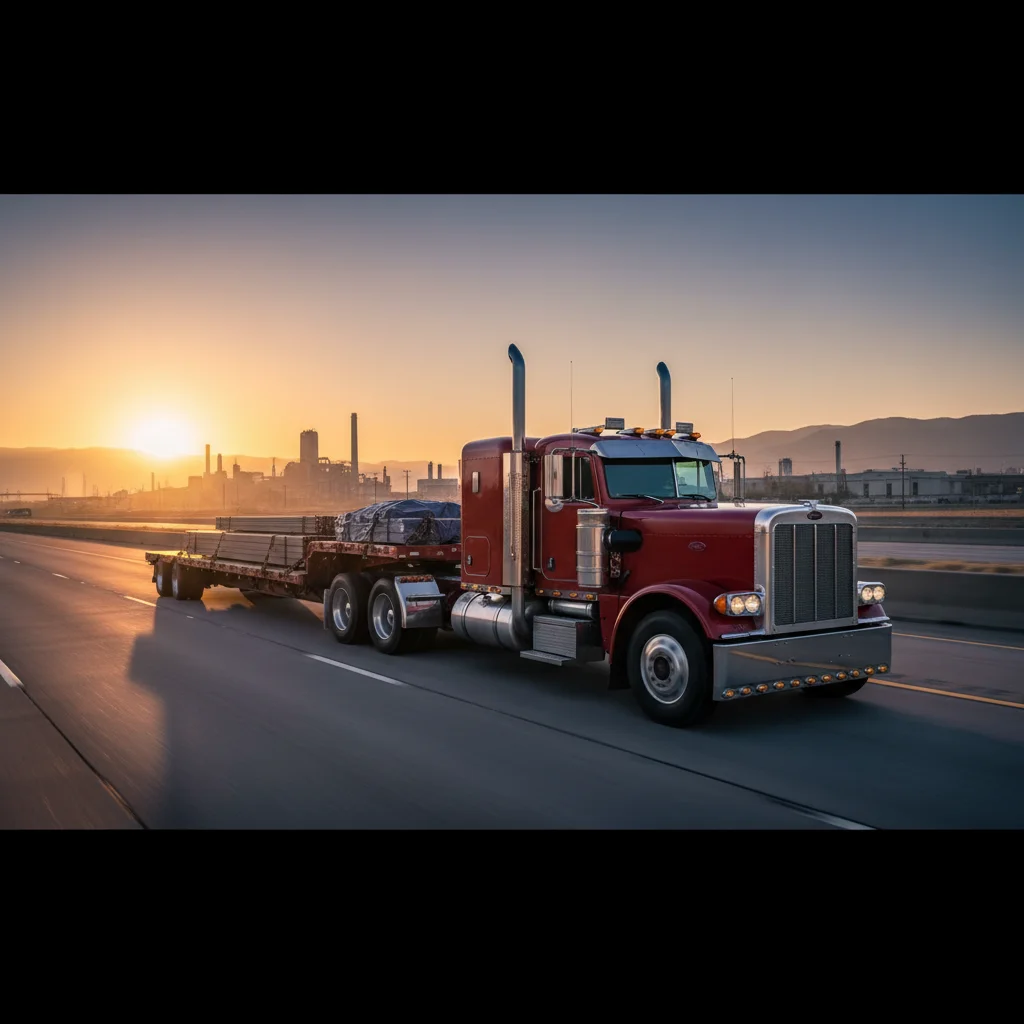
In the dynamic world of trucking and transportation, innovation often steers the conversation. New technologies, advanced emissions systems, and increasingly complex regulations frequently dominate industry discourse. However, amidst this drive towards the new, there's a specialized segment where seasoned reliability, simplified engineering, and strategic fleet management offer an often-overlooked advantage. We’re talking about pre-2000 heavy-duty trucks, specifically within the demanding realm of flatbed hauling.
While many fleets chase the latest models, we’ve found a distinct competitive edge by meticulously maintaining and strategically deploying our pre-2000 flatbed fleet. This approach isn't about resisting progress; it's about intelligent asset utilization, understanding specific operational niches, and, crucially, navigating the complex regulatory landscape to deliver a more efficient, reliable, and ultimately, cost-effective service for our clients. This article will delve into how our commitment to these robust, proven machines translates into superior flatbed transportation solutions.
Understanding the Mandate: A Regulatory Context
The term "mandate" in the trucking industry often refers to a host of regulations designed to reduce environmental impact and improve safety. While many of these are commendable and necessary, they've also introduced significant complexities and costs for modern fleets. The primary mandates impacting heavy-duty trucks today often revolve around emissions standards.
The Evolution of Emissions Regulations
- EPA 2007/2010 Standards: These regulations drastically reduced allowable emissions of particulate matter (PM) and nitrogen oxides (NOx). To meet these, manufacturers introduced technologies like Diesel Particulate Filters (DPF) and Selective Catalytic Reduction (SCR) systems, which utilize Diesel Exhaust Fluid (DEF).
- California Air Resources Board (CARB) Regulations: California, often a pioneer in environmental legislation, has implemented some of the most stringent emissions standards globally, such as the Truck and Bus Regulation, requiring fleets to upgrade to newer, cleaner engines or retrofit existing ones.
These mandates, while important for public health and environmental protection, come with operational challenges. Modern emissions systems, while effective, can be prone to sensor failures, DPF clogging, and SCR system issues, leading to increased maintenance complexity, downtime, and the recurring cost of DEF. For trucks manufactured before 2000, many of these stringent requirements either do not apply or are significantly less burdensome, creating a unique operational window.
The Unsung Heroes: Advantages of a Pre-2000 Flatbed Fleet
Our strategic choice to operate a pre-2000 flatbed fleet is rooted in several undeniable advantages that directly translate to enhanced service efficiency and reliability for our clients.
1. Simplified Maintenance & Increased Uptime
Perhaps the most significant advantage of older trucks lies in their mechanical simplicity. Pre-2000 engines, while not as 'clean' as their modern counterparts, are renowned for their robustness and ease of repair. They lack the complex web of sensors, emission control modules, DPFs, and SCR systems that can plague newer trucks.
- Fewer Emission-Related Failures: Modern trucks can experience significant downtime due to issues with their DPF, SCR, or DEF systems. These failures can be costly and time-consuming to diagnose and repair. Our older fleet virtually eliminates these types of breakdowns, leading to more consistent uptime.
- Easier Troubleshooting: Diagnosing issues on older trucks often requires mechanical aptitude rather than specialized computer diagnostics. Our experienced technicians can quickly identify and resolve problems, getting trucks back on the road faster.
- Readily Available Parts: Many parts for popular pre-2000 engines (e.g., Detroit Diesel Series 60, Cummins N14, Cat 3406) are widely available and often more affordable than proprietary components for newer models.
2. Lower Acquisition & Operating Costs
The financial benefits of a pre-2000 fleet are substantial and directly impact our ability to offer competitive pricing without compromising service quality.
- Reduced Capital Investment: The initial purchase price of a well-maintained pre-2000 truck is significantly lower than a new Class 8 truck, which can cost anywhere from $150,000 to over $200,000. This reduced capital expenditure means less financial burden, allowing us to invest more in maintenance, driver training, and overall service quality.
- No DEF Costs: Eliminating the need for Diesel Exhaust Fluid (DEF) translates to a direct saving. While DEF costs might seem minor per gallon (typically $2.50-$3.00), they add up considerably across a fleet over time.
- Potentially Lower Insurance: Depending on the insurer and specific risk profiles, older, simpler trucks may sometimes incur lower insurance premiums, though this varies.
3. Proven Reliability & Durability
Many pre-2000 engines and chassis designs are legendary for their longevity and ability to withstand millions of miles. These are the workhorses of the industry, built before the primary focus shifted dramatically to emissions control over raw, uncomplicated durability.
- Battle-Tested Engineering: Engines like the Cummins N14 or Detroit Series 60 are known for their robust build and straightforward design, making them inherently reliable when properly maintained.
- Resilience to Harsh Conditions: For flatbed operations, which often involve navigating construction sites, unpaved roads, and challenging loading/unloading environments, the robust nature of older trucks can be an asset.
4. Navigating Regulatory Exemptions and Compliance
While no fleet is entirely exempt from regulations, pre-2000 trucks often fall outside the scope of the most demanding and costly emissions mandates in many jurisdictions (though it's crucial to note that specific regional rules, like some CARB regulations, can still apply and are always carefully monitored and adhered to). This allows us to operate without the constant concern of an expensive emissions system failure or the need for costly upgrades mandated for newer equipment.
Beyond the Engine: Ensuring Peak Efficiency in Our Older Fleet
Owning older trucks isn't just about the initial purchase; it's about a disciplined, proactive approach to fleet management. Our efficiency doesn’t just come from the age of our trucks, but from the systems and people supporting them.
1. Rigorous, Proactive Maintenance Programs
This is the cornerstone of our strategy. We don't just fix problems; we prevent them. Our maintenance program is more intensive than average, tailored specifically to the needs of our vintage fleet.
- Scheduled Inspections & Preventative Maintenance: We adhere to a strict schedule for oil changes, fluid checks, brake inspections, tire rotations, and comprehensive multi-point inspections, often exceeding manufacturer recommendations.
- Dedicated, Experienced Technicians: Our mechanics specialize in these older models. They possess a deep understanding of their mechanical intricacies, rather than relying solely on diagnostic software. Their expertise is invaluable for keeping these machines running optimally.
- Quality Parts Sourcing: We prioritize OEM or high-quality aftermarket parts to ensure longevity and performance, understanding that a small saving on a cheap part can lead to significant downtime later.
2. Expert Flatbed Drivers
Operating a pre-2000 flatbed truck often requires a different skill set and mindset than driving a brand-new automatic. Our drivers are seasoned professionals who value reliability and possess the nuanced skills to maximize our fleet's efficiency.
- Manual Transmission Proficiency: Many older trucks feature manual transmissions. Our drivers are highly skilled in their operation, ensuring optimal fuel economy and control.
- Mechanical Empathy: Our drivers are trained to listen to their trucks, identify subtle changes in performance, and report potential issues early, allowing for proactive maintenance rather than reactive repairs.
- Load Securement Masters: Flatbed hauling demands meticulous attention to load securement. Our drivers are extensively trained and regularly updated on the latest regulations and best practices for securing diverse and often challenging cargo, ensuring safety and compliance on every haul.
3. Smart Dispatch & Route Optimization
Even the most reliable truck needs intelligent deployment. Our logistics team plays a critical role in maximizing efficiency.
- Strategic Load Matching: We excel at pairing the right truck with the right load, considering weight, dimensions, and destination, to optimize fuel consumption and wear-and-tear.
- Minimizing Empty Miles: Advanced routing software and a broad network help us minimize 'deadhead' (empty) miles, ensuring our trucks are productive for the maximum possible duration.
- Real-time Tracking & Communication: While our trucks are older, our dispatch technology is cutting-edge, providing real-time tracking and constant communication to ensure efficient operations and timely deliveries.
Dispelling Myths: Addressing Common Concerns about Older Trucks
It's natural for clients to have questions about working with an older fleet. We believe in transparency and addressing these concerns head-on.
Myth 1: Older Trucks are Inherently Less Safe
Reality: While newer trucks boast advanced safety features like collision mitigation and lane departure warnings, the fundamental safety of any truck depends heavily on maintenance and driver competence. Our rigorous inspection schedules, commitment to immediately addressing any issues, and extensive driver training ensure our pre-2000 fleet meets or exceeds safety standards. We also retrofit modern safety technologies where practical and beneficial, such as advanced lighting, improved braking components, and enhanced securement systems.
Myth 2: Older Trucks are Less Environmentally Friendly
Reality: This is a complex issue. On a per-mile basis, newer trucks with DPF/SCR systems produce fewer direct emissions. However, the environmental footprint of a truck isn't just about tailpipe emissions. Our approach considers:
- Longevity & Resource Use: By extending the life of existing vehicles, we reduce the demand for new truck manufacturing, which has a significant environmental cost in terms of raw materials, energy, and emissions from production.
- Operational Niche: For certain heavy-haul or specialized routes where the most stringent urban emissions mandates don't apply, the overall environmental impact can be carefully managed. Our meticulous maintenance also ensures engines run optimally, reducing unnecessary smoke or pollution.
- Elimination of DEF Manufacturing & Distribution: The production and distribution of DEF also carry an environmental cost.
Our goal is to offer a balanced, efficient solution, acknowledging the trade-offs while focusing on the overall sustainability of our operational model.
Myth 3: Older Trucks are Constantly Breaking Down
Reality: This misconception often arises from poorly maintained older vehicles. A well-maintained pre-2000 truck, especially one with a robust engine known for its reliability, can be significantly more dependable than a newer truck plagued by complex emissions system failures. Our proactive maintenance program and expert technicians are specifically designed to counter this perception, ensuring exceptional uptime.
The Flatbed Advantage: Why Pre-2000 Excels for Specific Loads
Our pre-2000 flatbed fleet is particularly well-suited for specific types of cargo, providing a significant advantage to clients with these needs:
- Heavy Equipment & Machinery: The robust chassis and proven powerplants of older trucks are ideal for hauling excavators, loaders, dozers, and other heavy industrial machinery.
- Construction Materials: Steel beams, concrete forms, oversized pipes, and other construction components are perfectly handled by our flatbeds, often destined for challenging job sites.
- Oversized & Specialty Loads: When a load doesn't fit in a standard dry van, our flatbeds offer the flexibility and strength required, often for routes where maneuvering is key.
- Reliability in Remote/Challenging Locales: For deliveries to remote construction sites or areas with limited access, the simpler mechanics of our fleet can be a lifesaver, reducing the likelihood of being stranded due to complex sensor issues.
Partnering for Success: What This Means for Our Clients
Choosing a flatbed service provider with a strategically managed pre-2000 fleet offers tangible benefits for your business:
- Cost-Effective Solutions: Our lower operational overhead allows us to offer competitive rates without cutting corners on service or safety.
- Unwavering Reliability & On-Time Delivery: Reduced downtime from complex emissions systems means a higher probability of on-schedule pickups and deliveries, crucial for project timelines.
- Specialized Expertise: We're not just moving freight; we're providing a specialized flatbed service with deep knowledge of load securement, regulatory navigation, and equipment optimization.
- Peace of Mind: Knowing your critical cargo is in the hands of an experienced team operating a meticulously maintained, robust fleet provides invaluable assurance.
Our Commitment to Excellence Through Meticulous Maintenance
Our success with a pre-2000 fleet isn't a secret; it's the result of unwavering commitment to maintenance excellence. This includes:
- Predictive Maintenance: Utilizing data and experience to anticipate potential failures before they occur.
- Continuous Training: Investing in our mechanics and drivers to keep their skills sharp and up-to-date with best practices, even on older equipment.
- Comprehensive Pre-Trip & Post-Trip Inspections: Empowering our drivers to be the first line of defense in identifying potential issues.
- Investing in Tools & Technology: While the trucks are older, our workshop is equipped with modern tools and facilities to ensure precision maintenance and repairs.
Conclusion
In an industry often obsessed with 'new,' we stand as a testament to the power of 'proven.' Our pre-2000 flatbed fleet isn't a relic of the past; it's a strategically chosen, highly efficient, and incredibly reliable asset that allows us to navigate today's trucking mandates with unparalleled agility. By focusing on mechanical simplicity, rigorous maintenance, and the expertise of our team, we deliver a flatbed service that minimizes downtime, optimizes costs, and consistently meets the demanding needs of our clients.
When your cargo demands the strength, flexibility, and unwavering reliability of flatbed transportation, consider the advantages of a fleet built on proven principles. Contact us today to learn how our unique approach can benefit your next project and provide you with a truly efficient, dependable flatbed service.